

Two drinks, one shared stimulant and a lot of myths. What 31 theanine trials, half a million UK Biobank participants and a 12-month matcha trial say about focus, health and longevity, and where matcha beats coffee and where it doesn't.
By Dr. Jan Schaefer
Most of my mornings start with a bowl of matcha or a mild sencha. An early lunch follows, and after it comes the one espresso of the day, which has to carry me through the rest of the day. But that espresso has a deadline for me. Why? Two genetic tests have put me among the slow caffeine metabolisers, so a coffee after 1 p.m. keeps me awake at night, and a strong one before noon does something else that sometimes poses another challenge for me. When I sit down to concentrate, a low, restless hum starts somewhere in my chest, and I have to get up and move. When I run between meetings all afternoon or I am constantly on the move, I barely notice it. But when I stop, sit down and want to zoom in to do some focused work, I do.
A few months ago that annoying hum pushed me deeper to explore matcha. I had liked it since a long trip to Japan two years ago, but it really took over my mornings only after I visited the tea fields around Hangzhou in China at the beginning of this year. The Hangzhou region is actually quite known for its Longjing tea. Longjing means Dragon Well in Chinese, and Longjing tea is one of the top three most famous green teas in China. But this region is not only known for Longjing, but to my surprise is also known for producing matcha. The tea growers there told me, with some pride, that matcha, powdered tea, began in China and that Japanese monks carried it home and built the ceremony around it. I suspect the Japanese side might tell that story slightly differently.
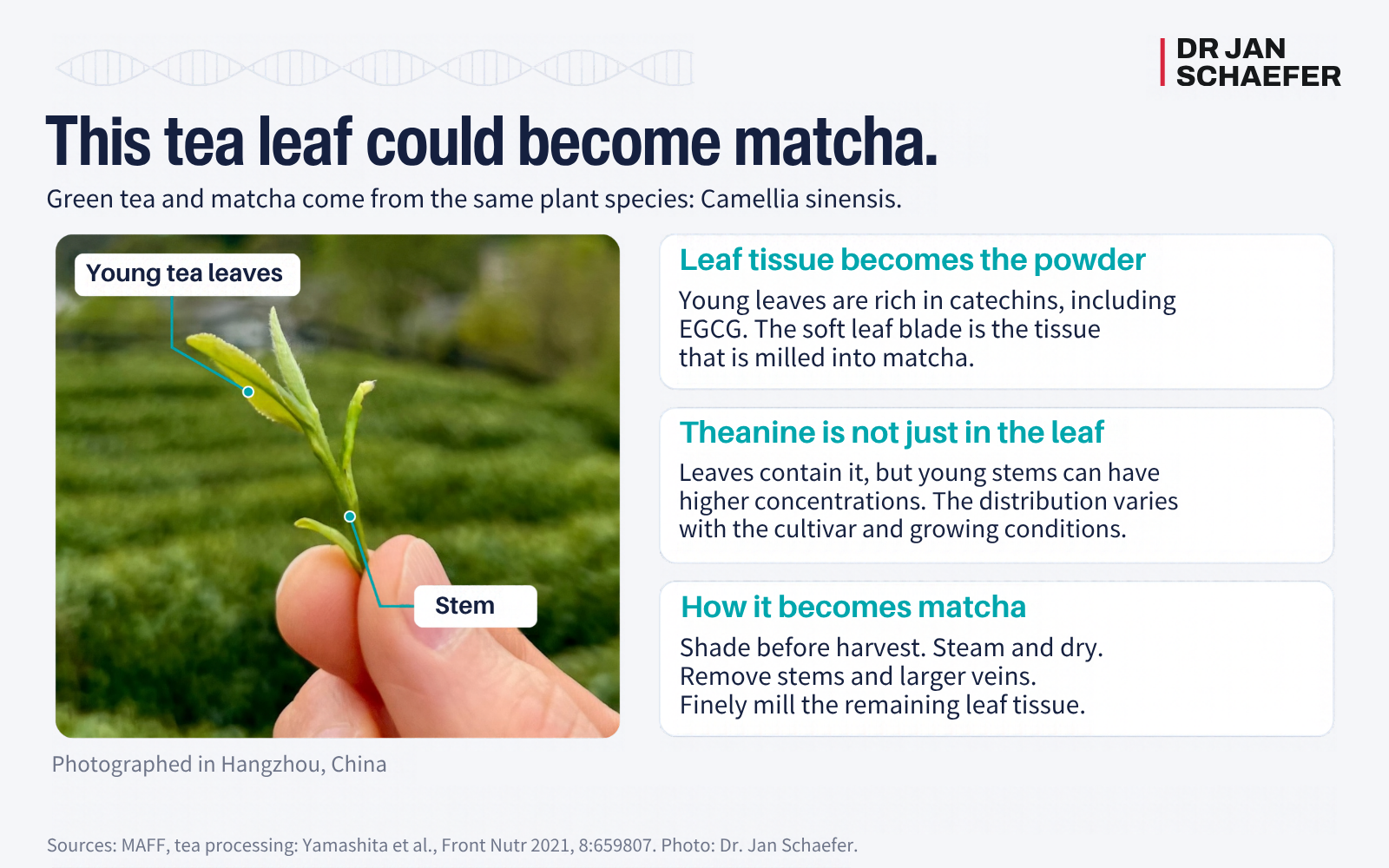
The more practical surprise though, was watching someone stir matcha into cold water and drink it. I had assumed a bamboo whisk and a bowl were part of the deal, and that assumption had kept matcha out of my working days. Without it, matcha became the drink I start with.
That puts me in a growing crowd. In the US, retail sales of matcha were up 86% over three years by autumn 2025, and a weak Japanese harvest pushed prices up further [1]. Coffee and matcha have also become something closer to identities. People describe themselves as a coffee person or a matcha person, and each camp carries its own beliefs. Such as that matcha gives you calm focus and coffee gives you the shakes, that coffee dehydrates you, that decaf is pointless. Some of those beliefs hold up. Several don't, and interestingly the two drinks share more than either camp likes to admit, because both of them run on the same molecule.
What people believe about coffee and matcha
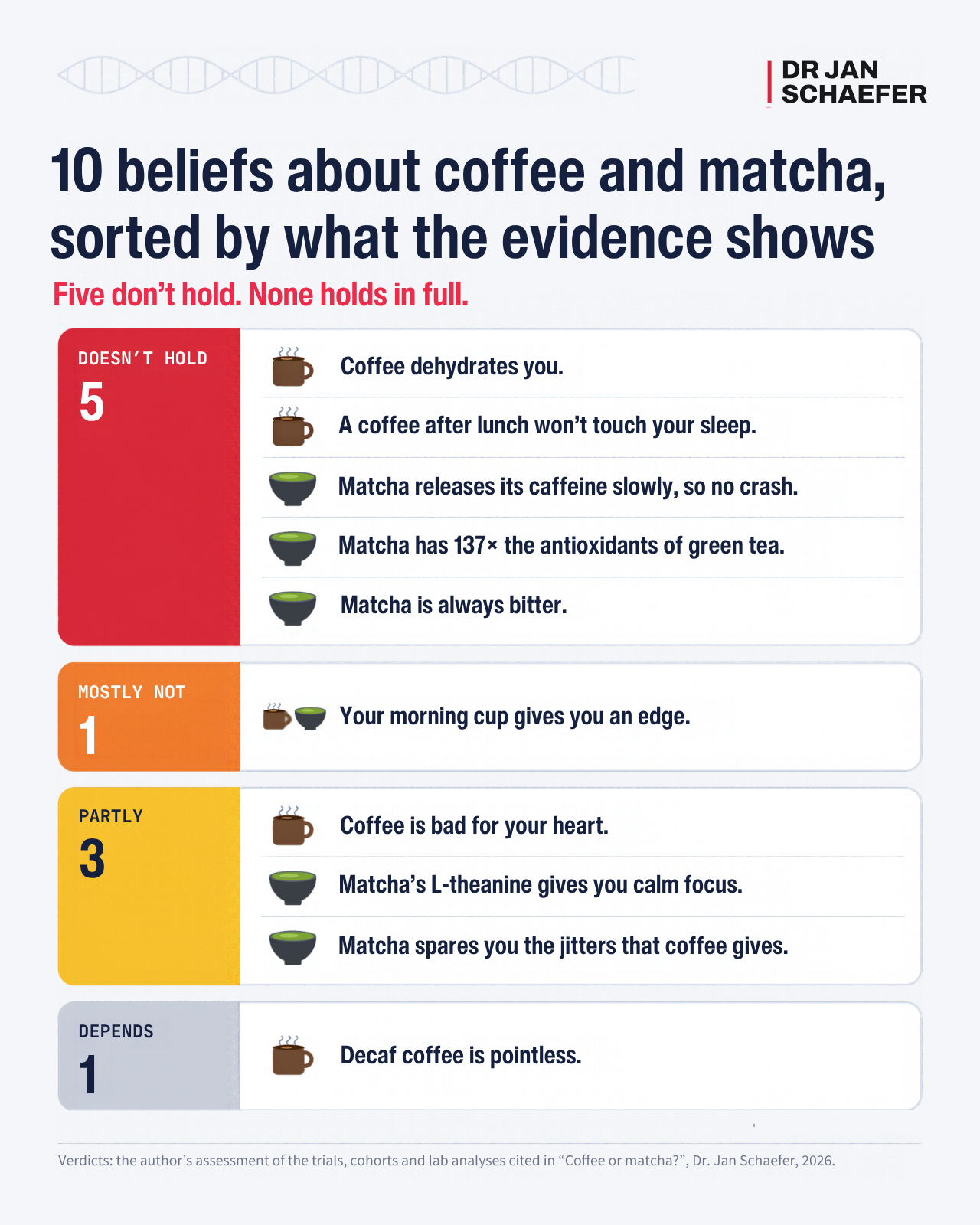
These are the ten beliefs I hear most often, each with the verdict the evidence below supports.
- Matcha doesn't give you the jitters that coffee does. → Partly.
- Coffee dehydrates you. → Doesn't hold.
- Matcha's calm focus comes from L-theanine working with caffeine. → Partly.
- A coffee after lunch won't touch your sleep. → Doesn't hold.
- Matcha is always bitter. → Doesn't hold.
- Coffee is bad for your heart. → Partly.
- Matcha releases its caffeine slowly, so there is no crash. → Doesn't hold.
- Your morning cup gives you an edge. → Mostly doesn't hold for daily drinkers.
- Matcha has 137 times the antioxidants of green tea. → Doesn't hold (as stated).
- Decaf is pointless. → Depends on the outcome.
One molecule but two drinks
Everything starts with what the two drinks have in common. While you are awake, your brain accumulates a molecule called adenosine, a by-product of energy-use that docks onto adenosine receptors and tells the brain that it is tired. Caffeine has a similar shape, so it slips into those receptors and blocks them without sending the tiredness signal [2]. Think of tiredness as tokens that need a parking space before they count. Caffeine takes the spaces, and the tokens circle unnoticed until it leaves. You generally feel the effect 15 to 30 minutes after a cup, and it usually lasts several hours [3].
How much caffeine the cup holds determines most of what follows now, and this is where the two drinks go separate ways. The matcha figures that circulate online trace back to one Japanese tea company that ran clinical trials of its own product.
In those trials, participants took 2 g of the company's matcha every day in capsules, and the company measured that daily dose at 72.5 mg caffeine, 50.3 mg theanine and 171 mg catechins [4]. A second batch of the same product, used in the sister trial, came out at 66.2 mg caffeine and 48 mg theanine [5]. So a 2 g serving of a good matcha, which is a realistic amount for one bowl, carries roughly 65 to 75 mg of caffeine.
For coffee, the US Food and Drug Administration lists 113 to 247 mg for a 12 fl oz cup of brewed coffee [6], and the European Food Safety Authority puts a 60 mL espresso at about 80 mg [3].
An espresso and a bowl of matcha are close. A large mug of filter coffee contains two to three times as much caffeine.
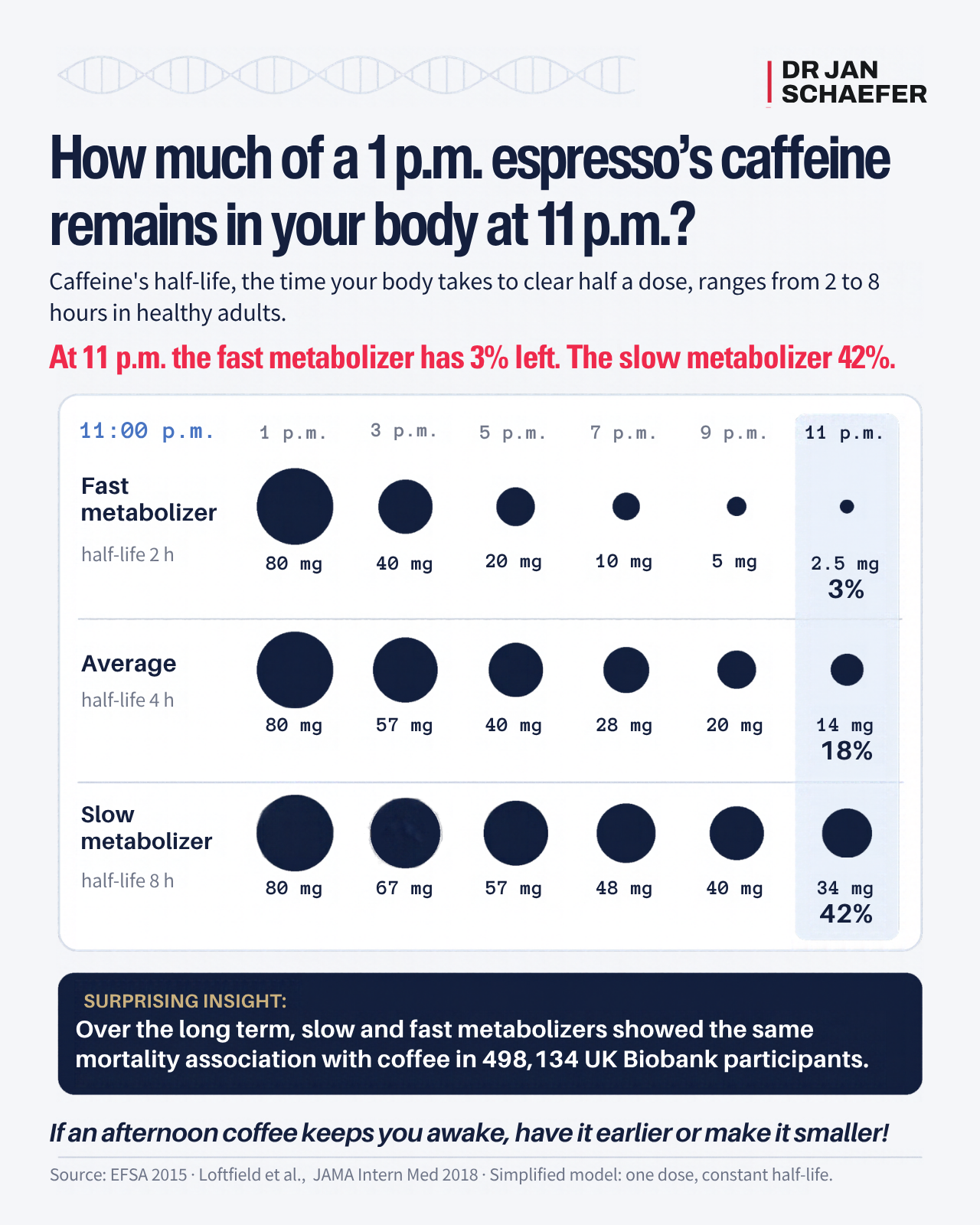
The second difference then occurs inside you, and has nothing to do with the drink itself. The same dose of caffeine does not act the same way in two people, because the liver clears caffeine at very different speeds. One enzyme, CYP1A2, handles about 95% of the breakdown [7]. The half-life, the time it takes the body to remove half of a dose, averages about 4 hours in healthy adults, but it ranges from 2 to 8 hours [3]. Smoking speeds the clearance up, and oral contraceptives slow it down [8]. Picture a bathtub with a drain of a different width in every person. The cup is what you pour in, and the drain decides how long it stays. My personal (metaphorical) drain is narrow, which is why an espresso at 1 p.m. is still partly in my bloodstream when I turn off the light at night.
Why coffee gives some people the jitters and what matcha does
Adenosine does more than signal tiredness. It also keeps a light foot on the brake of the brain's arousal systems, and when caffeine blocks it, those systems run hotter.
Most people feel that as alertness. Some feel it as restlessness, shaky hands or a racing heart, which trials record as anxiety and jitteriness on rating scales [9, 10]. For me it is more like an inner “hum”, a nervous energy with nowhere to go, and it actually only becomes a problem when my task is to sit still and think.
Who gets it and who doesn't was worked out by Peter Rogers and his colleagues at the University of Bristol in two randomised trials. In the first trial, they asked 379 adults to stay off caffeine for 16 hours and then gave them 100 mg of caffeine or a placebo. People who carried one particular variant of the adenosine receptor gene, the TT genotype of ADORA2A, reported noticeably more anxiety after the caffeine, on average 0.67 points on an 8-point scale against 0.11 for everyone else. Those people did not drink less coffee, though. If anything, they drank even more. And regular consumers showed a smaller anxiety response whatever their genes were, which led the authors to conclude that "substantial tolerance develops to the anxiogenic effect of caffeine" [9].
In the second trial, 369 adults came into the lab after a caffeine-free night, and the people who rarely drink caffeine got more anxiety and jitteriness from it, without any gain in alertness [10].
Now put the two trials together and the person most likely to end up shaky after a coffee is the occasional drinker who orders a large one.
For matcha, the first thing to check is the dose, because the same molecule does the same thing. A 2g serving of matcha carries only between a third and two-thirds of the caffeine in a 12 oz mug of filter coffee [4, 6], and fewer jitters per serving follow from that alone. Whether the theanine in the cup blunts jitters on top of the smaller dose is a separate claim, and despite my efforts I could not find a trial that tested it.
Theanine on its own had inconsistent, non-significant effects on anxiety across 31 pooled trials [11], and in mice, caffeine cancelled theanine's stress-reducing effect unless theanine clearly outweighed it [12]. So if coffee makes your hands shake and matcha doesn't, the likeliest explanation is the amount of caffeine in the cup, and an espresso or half a mug of coffee would get you to the same place. In my own case I honestly cannot separate the two, because I changed the dose and the drink at the same time. People with an anxiety disorder, panic attacks or palpitations should settle their caffeine dose with their physician rather than with my blog post.
What matcha adds and in what dose
L-theanine is an amino acid found almost only in tea, and it is the reason matcha gets sold as a “calm focus” drink. This year, Gerolymos and colleagues published the most thorough summary of what it does, a pooling of 31 randomised trials with 1,168 participants in Molecular Psychiatry [11]. Their primary question was “whether a single dose lowers acute stress in healthy adults”, and the answer was rather modest, a standardised mean difference of 0.31 where 0.5 counts as a medium effect. The authors also note that this result was "largely influenced by studies with a high risk of bias". The clearest result was seen elsewhere.
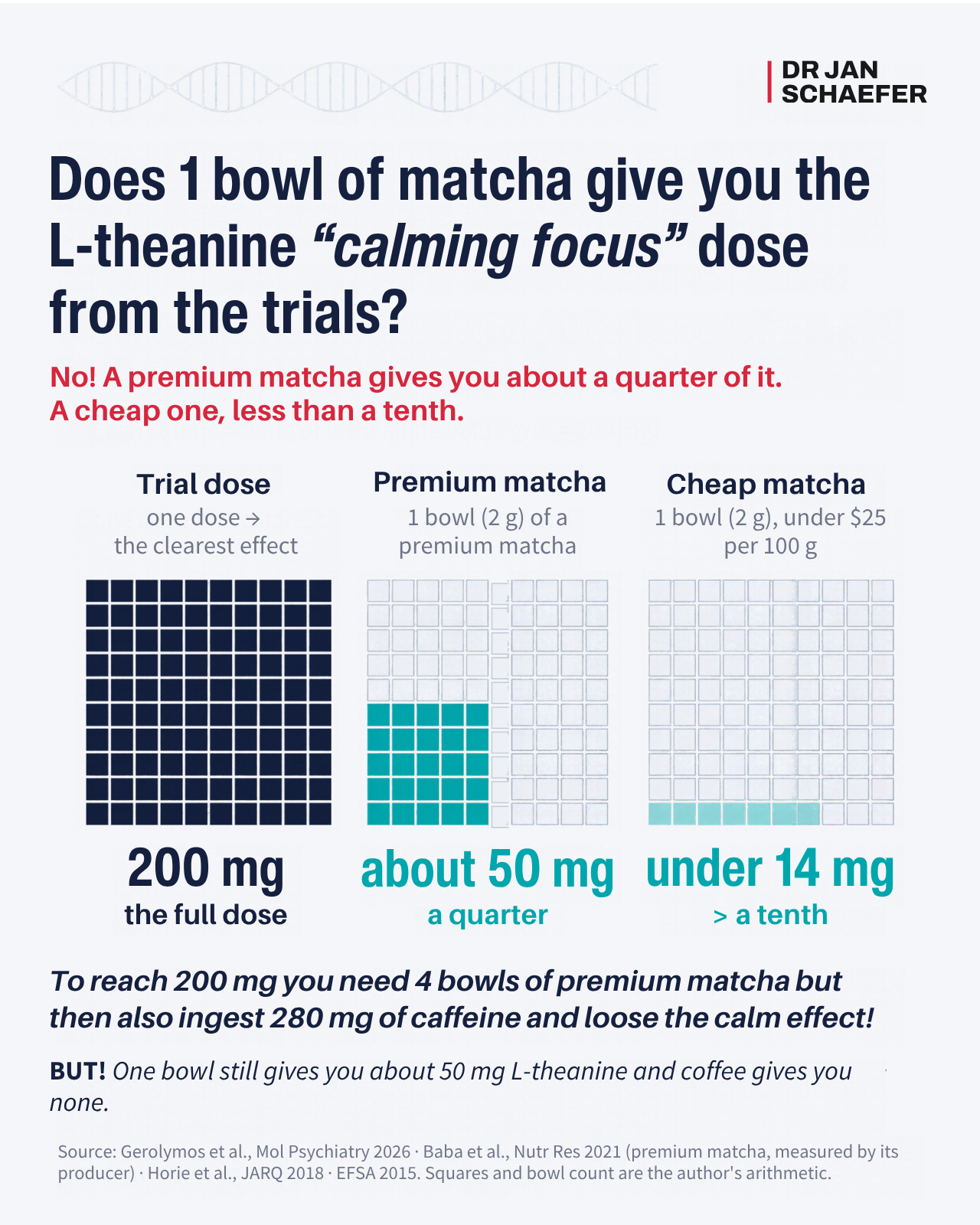
A single 200 mg dose, taken 30 to 60 minutes before testing, made people faster on a choice reaction-time task (SMD 0.51, 95% CI 0.25 to 0.77). Fatigue did not change, and EFSA had already concluded in 2011 that no cause-and-effect relationship had been established for any theanine health claim [13].
Now, let’s look again at the standard cup size. The dose that moved reaction time was 200 mg. The tea company's 2 g of high-grade matcha held about 50 mg [4, 5]. When Japanese researchers bought 25 powdered teas in US shops and analysed them, the ones priced above $50 per 100 g contained more than 15 mg theanine per gram, while the ones under $25 contained less than 7 mg, and teas under $5 per 100 g were being sold as matcha [14].
A Japanese survey of 67 matchas sold outside Japan found even only 6 above 17 mg per gram [12]. A brewed cup of green tea, for comparison, delivers about 8 mg [15].
So a cup of good matcha holds about a quarter of the theanine the studies used. A cheap one, a tenth.
That price gap probably also explains a complaint I hear often, that matcha is simply bitter. In a YouGov survey of 3,051 adults in Germany this April, 52% of those who had tried matcha said they don't like the taste [16]. The survey unfortunately didn't ask why, but chemists can offer an explanation.
Catechins carry the bitter and astringent side of tea [14, 17], while theanine and a few related compounds strengthen umami, the savoury taste, as Kaneko and colleagues showed when they separated a high-grade matcha into its fractions [18]. Matcha is traditionally made from leaves grown under shade, and shading lowers two of the catechins and raises theanine [19].
The cheap powders which were examined in the US sample had less than half the theanine of the expensive ones and tended to carry more of one catechin [14], so they should logically taste harsher, although nobody in that study tasted them.
Preparation plays a part as well, because in a panel of 14 tasters, matcha that was whisked slowly or briefly tasted more bitter and astringent than the same powder whisked faster and longer [20]. Whether cooler water helps has not been tested in matcha, so I can only confidently say that the bowl I stir into cold water tastes good to me.
Also, the synergy story does not hold up once you look at the ratios. The small trials behind "caffeine plus theanine" were published in 2008, and they gave more theanine than caffeine: 100 mg of theanine with 50 mg of caffeine in two of them, 250 with 150 in the third [21, 22, 23].
A matcha serving reverses that ratio, with roughly 70 mg of caffeine to 50 mg of theanine [4], and when Camfield and colleagues pooled 11 of these combination studies, the effects tracked the caffeine dose more than the theanine dose [24].
Keiko Unno's group at the University of Shizuoka writes that caffeine "has a strong antagonistic effect against theanine", and in their mouse experiments matcha only reduced stress when the molar amount of caffeine plus EGCG stayed below twice the theanine plus arginine. When they applied that criterion to the market, 32 of 76 matchas sold in Japan passed and 1 of 67 sold overseas did [12]. These are mice and one research group, so I hold the threshold loosely, but the people who found it want matcha to work.
Matcha's fairest point comes from a much smaller dose. In a small EEG study, Anna Nobre and colleagues gave 50 mg of theanine to 16 people and a placebo to 19, and the theanine group showed more alpha brain-wave activity while resting with eyes closed. A second study by the same group repeated the result [20]. Alpha waves are the rhythm of a brain that is awake but not straining, comparable to a car engine idling at a red light. 50mg is a realistic cup dose, which makes this the one theanine finding your matcha can actually reproduce and which also shows a brain-wave signal in 35 people.
Now the “slow-release claim” does worse. A 2026 article from a US health system states that matcha's caffeine is absorbed more slowly than coffee's but gives no source [21], and the claim repeats across the internet. The only head-to-head measurement I could locate is a letter to The Lancet from 1973, in which three volunteers drank caffeine as tea, coffee and cola, and their blood levels peaked after about 30 minutes for tea and coffee alike; cola was the slow one [22]. From my point of view the smaller peak from matcha follows from the smaller dose, and nothing more than that has been shown so far.
Why your coffee stops working
Now let’s look at coffee for a moment. If you drink coffee every day, your brain has adapted to it, and that changes what your morning cup does. Rogers' second trial made the point with unusual rigour, because the team checked caffeine in participants' saliva to verify who had abstained. Regular drinkers who got a placebo reacted in about 485 milliseconds on the reaction-time task. With caffeine, they came down to about 417, which is roughly where the non-drinkers were without any caffeine at all [10]. So, how should you read that?
For a daily coffee drinker, the morning cup mostly undoes last night's withdrawal.
Here, the bathtub picture analogy does not explain this, because tolerance changes the receiving side, the receptors, but not the drain.
And once you stop drinking it, the adaptation runs in reverse. Laura Juliano and Roland Griffiths reviewed the withdrawal studies and found that symptoms start 12 to 24 hours after the last dose, peak at 20 to 51 hours and last 2 to 9 days. They appeared in people who had been taking as little as 100 mg a day [23]. How many caffeine-free days restore full sensitivity has not been measured in any study I could find. All of this should also apply to daily matcha exactly as it applies to coffee, because it is the caffeine that adapts, not the drink.
Personally, I can stop both without much trouble, as it happens, but what I miss most is the routine. If I had to give one up for good, it would be the espresso, and the green tea would stay.
What else happens in your body (backed by evidence)
Heart. Gregory Marcus and his team at the University of California, San Francisco, wanted to know what coffee does to heart rhythm in ordinary life rather than in a lab. They fitted 100 adults with a heart monitor, an activity tracker and a glucose sensor, and for 14 days they texted them every evening with a random instruction: drink coffee tomorrow, or avoid caffeine. On coffee days, participants had 58 premature atrial contractions, the extra beats from the upper chambers, against 53 on caffeine-free days, a difference that was not statistically significant (rate ratio 1.09, 95% CI 0.98 to 1.20). Extra beats from the lower chambers did rise, from 102 to 154 a day (rate ratio 1.51). Coffee days also brought 1,058 more steps and 36 minutes less sleep [29]. The participants were young and healthy, with a mean age of 39, so the result says little about anyone who already has a rhythm disorder.
Hydration. The dehydration myth was tested directly by Sophie Killer and colleagues, who had 50 male habitual coffee drinkers spend 3 days drinking 4 cups of 200 mL coffee a day and another 3 days drinking the same volume of water. Total body water came out at 51.5 kg on coffee and 51.4 kg on water [30]. Coffee hydrated 50 habitual drinkers just as well as water, at least in men and at moderate intake.
Sleep. EFSA's risk assessment found that daily intakes up to 400 mg raise no safety concern for healthy adults, with 200 mg a day in pregnancy, but it also noted that a single 100 mg dose "may affect sleep duration and patterns in some adults, particularly when consumed close to bedtime" [3]. One matcha or one espresso is already near that line, and for a slow metaboliser like me, "close to bedtime" starts after lunch.
The long game: what cohorts of hundreds of thousands show
Almost everything we know about coffee, tea and long-term health comes from cohort studies, which follow people who chose their own habits and record who gets sick and who dies. A randomised trial, by contrast, assigns the habit by chance.
Cohorts show who does well; trials show what causes it.
So every result in this section is an association, and the people who drink 3 cups a day differ from the people who drink none in a dozen other ways. Smoking is the classic example, because coffee and cigarettes went together for decades, and the largest coffee review notes that apparent harms were "largely nullified by adequate adjustment for smoking" [26]. With that caveat in place, the pattern across the cohorts is consistent.
Coffee. Robin Poole and colleagues pulled together 201 meta-analyses of observational studies and found that 3 to 4 cups a day went with 17% lower all-cause mortality (relative risk 0.83) and 19% lower cardiovascular mortality, with the harms concentrated in pregnancy [26]. Erikka Loftfield's team then asked, in 498,134 UK Biobank participants followed for 10 years, whether the association holds for people whose genes make them clear caffeine slowly. It did. Coffee went with lower mortality up to 8 or more cups a day, for instant, ground and decaffeinated coffee alike, and a genetic score for caffeine metabolism showed "no evidence of effect modification" [27]. Slow metabolisers showed the same mortality association as fast ones. Sugar does change them. In 171,616 UK Biobank participants, unsweetened coffee kept the association at every intake level, while above 4.5 sugar-sweetened coffees a day it disappeared (hazard ratio 1.05, 95% CI 0.82 to 1.36) [28].
For type 2 diabetes, 28 cohorts with 1.1 million people found a relative risk of 0.67 at 6 cups a day, and the per-cup figures were almost the same for caffeinated coffee (0.91) and decaf (0.94) [29]. For dementia, the study that made headlines this month followed 131,821 nurses and health professionals in two Harvard cohorts for a median of 37 years. The top quarter of caffeinated coffee drinkers had a hazard ratio of 0.82, the association was strongest at 2 to 3 cups a day, and decaf showed none [30]. The write-ups quote 141 against 330 dementia cases per 100,000 people a year [31], but those are crude rates that are not adjusted for age or anything else, so the 18% from the adjusted model is the number to remember. Put the diabetes and dementia results side by side and a pattern appears. Decaf coffee kept the diabetes association but lost the dementia one, which hints at non-caffeine compounds doing the metabolic work and caffeine doing the brain work. That is a pattern in the data, but the mechanism behind it is still unclear.
Tea. UK Biobank tea drinkers, mostly black tea, at 2 to 3 cups a day had a mortality hazard ratio of 0.87, regardless of whether they also drank coffee or how fast their genes clear caffeine [37]. In China-PAR, which followed 100,902 Chinese adults, habitual tea drinkers had 1.26 more years of life expectancy at age 50 [38]. The Japanese cohorts are where green tea itself appears. In the Ohsaki cohort of 40,530 adults, women who drank 5 or more cups of green tea a day had a hazard ratio of 0.77 for all-cause mortality, although cancer mortality did not move [39]. And in the JPHC cohort of 82,369 adults followed for 13 years, both green tea drinkers and coffee drinkers had fewer strokes: a hazard ratio of 0.80 at 4 or more cups of green tea a day, and 0.80 to 0.81 at one or more coffees a day [40]. So two drinks, one cohort but the same direction.
Catechins. The polyphenols that make matcha "antioxidant" have randomised evidence of their own, but on risk markers rather than on disease. Saman Khalesi and colleagues pooled 13 trials and found that green tea and its catechins lowered systolic blood pressure by 2.08 mmHg and LDL cholesterol by 0.16 mmol/L, with larger effects from extracts and in people whose blood pressure was already high [41]. This is per se good, but these are still small effects on markers, partly from extracts, and no trial has run long enough to show the impact on disease or lifespan. And BTW, the "137 times the antioxidants" figure comes from a 2003 paper by two chemists in Colorado who compared the EGCG in one matcha with one commercial green tea; against the best values published for other green teas, the same paper found about threefold [42]. Nevertheless, what still holds regardless of the multiplier is that you swallow the whole leaf, so you take in the catechins that brewing leaves behind in the bag.
Matcha itself. No cohort has ever followed matcha drinkers. The only long trial I know of gave 99 older adults with mild cognitive decline 2 g of matcha or a placebo every day for 12 months. Global cognition and daily function did not change, recognising emotions in faces improved slightly (P = 0.028), and sleep quality came out at P = 0.088 [38]. So Matcha's longevity evidence, in short, seems to be borrowed from green tea's.
So does matcha beat coffee?
On the long term evidence side, maybe not. Coffee has 201 meta-analyses, half a million people with their genetics, and a 37-year dementia cohort behind it [26, 27, 30]. Matcha has one 12-month trial of 99 people and whatever green tea lends it [38, 34, 35].
On the cup, matcha wins three specific rounds. It delivers less caffeine per typical serving [4, 6], which is a concrete advantage if you sleep badly or clear caffeine slowly. It contains L-theanine, which coffee does not, at a dose that matches the alpha-wave study and falls well short of the reaction-time trials [20, 11]. And it delivers the whole leaf's catechins, which lowered blood pressure and LDL slightly in randomised trials of green tea [36].
On caffeine itself, they tie. Tolerance, withdrawal, sleep and jitters follow the dose, whichever cup it comes in [9, 10, 23]. Neither drink is a medicine, and "calm focus" deserves exactly the evidence it has, which is “a brain-wave signal at cup dose” and nothing more.
What do you do with this?
- Count milligrams, not cups. A 2 g matcha is roughly 70 mg, an espresso about 80, and a 12 oz mug of filter coffee anywhere from 113 to 247 [3, 4, 6]. EFSA's line for healthy adults is 400 mg a day, 200 mg in pregnancy [3].
- Do bedtime arithmetics with your own half-life. The average is 4 hours, the range 2 to 8 [3]. If a 3 p.m. coffee still has you awake at 11, you are probably at the slow end, as I am.
- If coffee makes you jittery, change the dose before you change the drink. A matcha, an espresso or a smaller mug all lower it [4, 6]. If you rarely drink caffeine, a large coffee is the likeliest trigger [10].
- Don't expect the trial effect from the cup. The theanine trials used 200 mg, and a good serving holds about a quarter of that [11, 4]. Buy by price and origin, and ask the brand for milligrams per serving [12, 14].
- Drink coffee and tea between meals if iron matters to you. Black tea cut iron absorption from a meal by 79 to 94%, coffee was a potent inhibitor, and matcha is untested but polyphenol-rich [39].
- Skip the sugar, let it cool, filter it. The mortality association faded for heavily sweetened coffee [28]. IARC classifies drinks above 65 °C as probably carcinogenic to the oesophagus, and coffee itself as not classifiable [40]. In 508,747 Norwegians followed for 20 years, filtered coffee went with lower mortality than no coffee and unfiltered did not, which the authors attribute to cholesterol-raising substances that a paper filter holds back [41, 42].
- Don't stack matcha with green-tea-extract pills. Supplements delivering 800 mg EGCG a day or more raised liver enzymes in trials, while traditional green tea at usual intakes is considered safe [43].
Back in my own kitchen, where the numbers are now visible on my kitchen counter. Coffee has earned its place, because few things people drink every day come with this much long-term data, from diabetes to dementia, as long as the dose suits your sleep and your nerves [26, 29, 30]. Matcha comes with less data and a smaller dose: about 70 mg of caffeine in 2 g, some L-theanine, and the catechins of the whole leaf, which lowered blood pressure and LDL slightly in randomised trials of green tea [4, 36].
I enjoy both drinks.A nice bowl of matcha most mornings, stirred into cold water or hot, and one good social espresso a few times a week, after a late brunch, early lunch, but always before 1 p.m.!
A note on the evidence: every long-term result above is an association from a cohort study, in which people chose their own habits. The randomised evidence covers short-term effects only: reaction time, anxiety ratings, heart rhythm, hydration, blood pressure and LDL. The matcha composition figures come from one producer's product, measured by that producer. Nothing here is a treatment recommendation; health conditions, pregnancy and medication questions belong with your physician.
Sources
- Durbin D. How much for matcha? Prices for the popular powdered tea soar due to global demand. Associated Press, 16 September 2025.
- Fredholm BB, Bättig K, Holmén J, Nehlig A, Zvartau EE. Actions of caffeine in the brain with special reference to factors that contribute to its widespread use. Pharmacol Rev. 1999;51(1):83–133.
- European Food Safety Authority. EFSA explains risk assessment: caffeine. 2015.
- Baba Y, Kaneko T, Takihara T. Matcha consumption maintains attentional function following a mild acute psychological stress without affecting a feeling of fatigue: a randomized placebo-controlled study in young adults. Nutr Res. 2021;88:44–52. doi:10.1016/j.nutres.2020.12.024
- Baba Y, Inagaki S, Nakagawa S, Kobayashi M, Kaneko T, Takihara T. Effects of daily matcha and caffeine intake on mild acute psychological stress-related cognitive function in middle-aged and older adults: a randomized placebo-controlled study. Nutrients. 2021;13(5):1700. doi:10.3390/nu13051700
- US Food and Drug Administration. Spilling the beans: how much caffeine is too much? Updated 28 August 2024.
- Nehlig A. Interindividual differences in caffeine metabolism and factors driving caffeine consumption. Pharmacol Rev. 2018;70(2):384–411. doi:10.1124/pr.117.014407
- Grzegorzewski J, Bartsch F, Köller A, König M. Pharmacokinetics of caffeine: a systematic analysis of reported data for application in metabolic phenotyping and liver function testing. Front Pharmacol. 2022;12:752826. doi:10.3389/fphar.2021.752826
- Rogers PJ, Hohoff C, Heatherley SV, et al. Association of the anxiogenic and alerting effects of caffeine with ADORA2A and ADORA1 polymorphisms and habitual level of caffeine consumption. Neuropsychopharmacology. 2010;35(9):1973–1983. doi:10.1038/npp.2010.71
- Rogers PJ, Heatherley SV, Mullings EL, Smith JE. Faster but not smarter: effects of caffeine and caffeine withdrawal on alertness and performance. Psychopharmacology. 2013;226(2):229–240. doi:10.1007/s00213-012-2889-4
- Gerolymos C, Saddier E, Boyer L, Fond G. Cognitive and affective effects of L-theanine: a systematic review and meta-analysis of 31 randomized trials. Mol Psychiatry. 2026. doi:10.1038/s41380-026-03727-9
- Unno K, Furushima D, Hamamoto S, et al. Stress-reducing function of matcha green tea in animal experiments and clinical trials. Nutrients. 2018;10(10):1468. doi:10.3390/nu10101468
- EFSA Panel on Dietetic Products, Nutrition and Allergies. Scientific opinion on the substantiation of health claims related to L-theanine from Camellia sinensis (L.) Kuntze (tea) and improvement of cognitive function, alleviation of psychological stress, maintenance of normal sleep and reduction of menstrual discomfort. EFSA Journal. 2011;9(6):2238. doi:10.2903/j.efsa.2011.2238
- Horie H, Ema K, Nishikawa H, Nakamura Y. Comparison of the chemical components of powdered green tea sold in the US. JARQ. 2018;52(2):143–147. doi:10.6090/jarq.52.143
- Keenan EK, Finnie MDA, Jones PS, Rogers PJ, Priestley CM. How much theanine in a cup of tea? Effects of tea type and method of preparation. Food Chem. 2011;125(2):588–594. doi:10.1016/j.foodchem.2010.08.071
- Wulff M. Matcha: Noch Social-Media-Hype oder schon Alltagsprodukt? YouGov Deutschland, 2 November 2026.
- Narukawa M, Noga C, Ueno Y, Sato T, Misaka T, Watanabe T. Evaluation of the bitterness of green tea catechins by a cell-based assay with the human bitter taste receptor hTAS2R39. Biochem Biophys Res Commun. 2011;405(4):620–625. doi:10.1016/j.bbrc.2011.01.079
- Kaneko S, Kumazawa K, Masuda H, Henze A, Hofmann T. Molecular and sensory studies on the umami taste of Japanese green tea. J Agric Food Chem. 2006;54(7):2688–2694. doi:10.1021/jf0525232
- Sano T, Horie H, Matsunaga A, Hirono Y. Effect of shading intensity on morphological and color traits and on chemical components of new tea (Camellia sinensis L.) shoots under direct covering cultivation. J Sci Food Agric. 2018;98(15):5666–5676. doi:10.1002/jsfa.9112
- Li S, Tian H, Zhu G, Wei Z. The application of untargeted metabolomics coupled with chemometrics for the analysis of agitation effects on the sensory profiles of matcha tea. Curr Res Food Sci. 2024;9:100843. doi:10.1016/j.crfs.2024.100843
- Owen GN, Parnell H, De Bruin EA, Rycroft JA. The combined effects of L-theanine and caffeine on cognitive performance and mood. Nutr Neurosci. 2008;11(4):193–198. doi:10.1179/147683008X301513
- Kelly SP, Gomez-Ramirez M, Montesi JL, Foxe JJ. L-theanine and caffeine in combination affect human cognition as evidenced by oscillatory alpha-band activity and attention task performance. J Nutr. 2008;138(8):1572S–1577S. doi:10.1093/jn/138.8.1572S
- Haskell CF, Kennedy DO, Milne AL, Wesnes KA, Scholey AB. The effects of L-theanine, caffeine and their combination on cognition and mood. Biol Psychol. 2008;77(2):113–122. doi:10.1016/j.biopsycho.2007.09.008
- Camfield DA, Stough C, Farrimond J, Scholey AB. Acute effects of tea constituents L-theanine, caffeine, and epigallocatechin gallate on cognitive function and mood: a systematic review and meta-analysis. Nutr Rev. 2014;72(8):507–522. doi:10.1111/nure.12120
- Nobre AC, Rao A, Owen GN. L-theanine, a natural constituent in tea, and its effect on mental state. Asia Pac J Clin Nutr. 2008;17(Suppl 1):167–168.
- UPMC HealthBeat. Matcha vs. coffee. 6 May 2026.
- Marks V, Kelly JF. Absorption of caffeine from tea, coffee, and Coca Cola. Lancet. 1973;1(7807):827; as summarised in White JR Jr, Padowski JM, Zhong Y, et al. Pharmacokinetic analysis and comparison of caffeine administered rapidly or slowly in coffee chilled or hot versus chilled energy drink in healthy young adults. Clin Toxicol (Phila). 2016;54(4):308–312. doi:10.3109/15563650.2016.1146740
- Juliano LM, Griffiths RR. A critical review of caffeine withdrawal: empirical validation of symptoms and signs, incidence, severity, and associated features. Psychopharmacology. 2004;176(1):1–29. doi:10.1007/s00213-004-2000-x
- Marcus GM, Rosenthal DG, Nah G, et al. Acute effects of coffee consumption on health among ambulatory adults. N Engl J Med. 2023;388(12):1092–1100. doi:10.1056/NEJMoa2204737
- Killer SC, Blannin AK, Jeukendrup AE. No evidence of dehydration with moderate daily coffee intake: a counterbalanced cross-over study in a free-living population. PLoS One. 2014;9(1):e84154. doi:10.1371/journal.pone.0084154
- Poole R, Kennedy OJ, Roderick P, Fallowfield JA, Hayes PC, Parkes J. Coffee consumption and health: umbrella review of meta-analyses of multiple health outcomes. BMJ. 2017;359:j5024. doi:10.1136/bmj.j5024
- Loftfield E, Cornelis MC, Caporaso N, Yu K, Sinha R, Freedman N. Association of coffee drinking with mortality by genetic variation in caffeine metabolism: findings from the UK Biobank. JAMA Intern Med. 2018;178(8):1086–1097. doi:10.1001/jamainternmed.2018.2425
- Liu D, Li ZH, Shen D, et al. Association of sugar-sweetened, artificially sweetened, and unsweetened coffee consumption with all-cause and cause-specific mortality: a large prospective cohort study. Ann Intern Med. 2022;175(7):909–917. doi:10.7326/M21-2977
- Ding M, Bhupathiraju SN, Chen M, van Dam RM, Hu FB. Caffeinated and decaffeinated coffee consumption and risk of type 2 diabetes: a systematic review and a dose-response meta-analysis. Diabetes Care. 2014;37(2):569–586. doi:10.2337/dc13-1203
- Zhang Y, Liu Y, Li YP, et al. Coffee and tea intake, dementia risk, and cognitive function. JAMA. 2026;335(11):961–974. doi:10.1001/jama.2025.27259
- DeAngelis T. Good news for coffee and tea drinkers. Monitor on Psychology. 2026;57(8):72. American Psychological Association, 1 November 2026.
- Inoue-Choi M, Ramirez Y, Cornelis MC, Berrington de González A, Freedman ND, Loftfield E. Tea consumption and all-cause and cause-specific mortality in the UK Biobank: a prospective cohort study. Ann Intern Med. 2022;175(9):1201–1211. doi:10.7326/M22-0041
- Wang X, Liu F, Li J, et al. Tea consumption and the risk of atherosclerotic cardiovascular disease and all-cause mortality: the China-PAR project. Eur J Prev Cardiol. 2020;27(18):1956–1963. doi:10.1177/2047487319894685
- Kuriyama S, Shimazu T, Ohmori K, et al. Green tea consumption and mortality due to cardiovascular disease, cancer, and all causes in Japan: the Ohsaki study. JAMA. 2006;296(10):1255–1265. doi:10.1001/jama.296.10.1255
- Kokubo Y, Iso H, Saito I, et al. The impact of green tea and coffee consumption on the reduced risk of stroke incidence in Japanese population: the Japan Public Health Center-based study cohort. Stroke. 2013;44(5):1369–1374. doi:10.1161/STROKEAHA.111.677500
- Khalesi S, Sun J, Buys N, Jamshidi A, Nikbakht-Nasrabadi E, Khosravi-Boroujeni H. Green tea catechins and blood pressure: a systematic review and meta-analysis of randomised controlled trials. Eur J Nutr. 2014;53(6):1299–1311. doi:10.1007/s00394-014-0720-1
- Weiss DJ, Anderton CR. Determination of catechins in matcha green tea by micellar electrokinetic chromatography. J Chromatogr A. 2003;1011(1–2):173–180. doi:10.1016/S0021-9673(03)01133-6
- Uchida K, Meno K, Korenaga T, et al. Effect of matcha green tea on cognitive functions and sleep quality in older adults with cognitive decline: a randomized controlled study over 12 months. PLoS One. 2024;19(8):e0309287. doi:10.1371/journal.pone.0309287
- Hurrell RF, Reddy M, Cook JD. Inhibition of non-haem iron absorption in man by polyphenolic-containing beverages. Br J Nutr. 1999;81(4):289–295.
- Loomis D, Guyton KZ, Grosse Y, et al. Carcinogenicity of drinking coffee, mate, and very hot beverages. Lancet Oncol. 2016;17(7):877–878. doi:10.1016/S1470-2045(16)30239-X
- Tverdal A, Selmer R, Cohen JM, Thelle DS. Coffee consumption and mortality from cardiovascular diseases and total mortality: does the brewing method matter? Eur J Prev Cardiol. 2020;27(18):1986–1993. doi:10.1177/2047487320914443
- European Society of Cardiology. How to make the healthiest coffee during COVID-19 lockdown. Press release, 22 April 2020.
- EFSA Panel on Food Additives and Nutrient Sources added to Food (Younes M, et al.). Scientific opinion on the safety of green tea catechins. EFSA Journal. 2018;16(4):5239. doi:10.2903/j.efsa.2018.5239


